Best Exterior Paint Colors for Farmhouse Homes
Farmhouse style depends more on architectural texture than color variety: board-and-batten siding, standing-seam metal roofs, and deep covered porches do the heavy lifting. The most iconic Farmhouses use just two colors: a white or near-white body with dark accents on trim, doors, and hardware. Restraint is the entire point.
What Makes Farmhouse Homes Unique
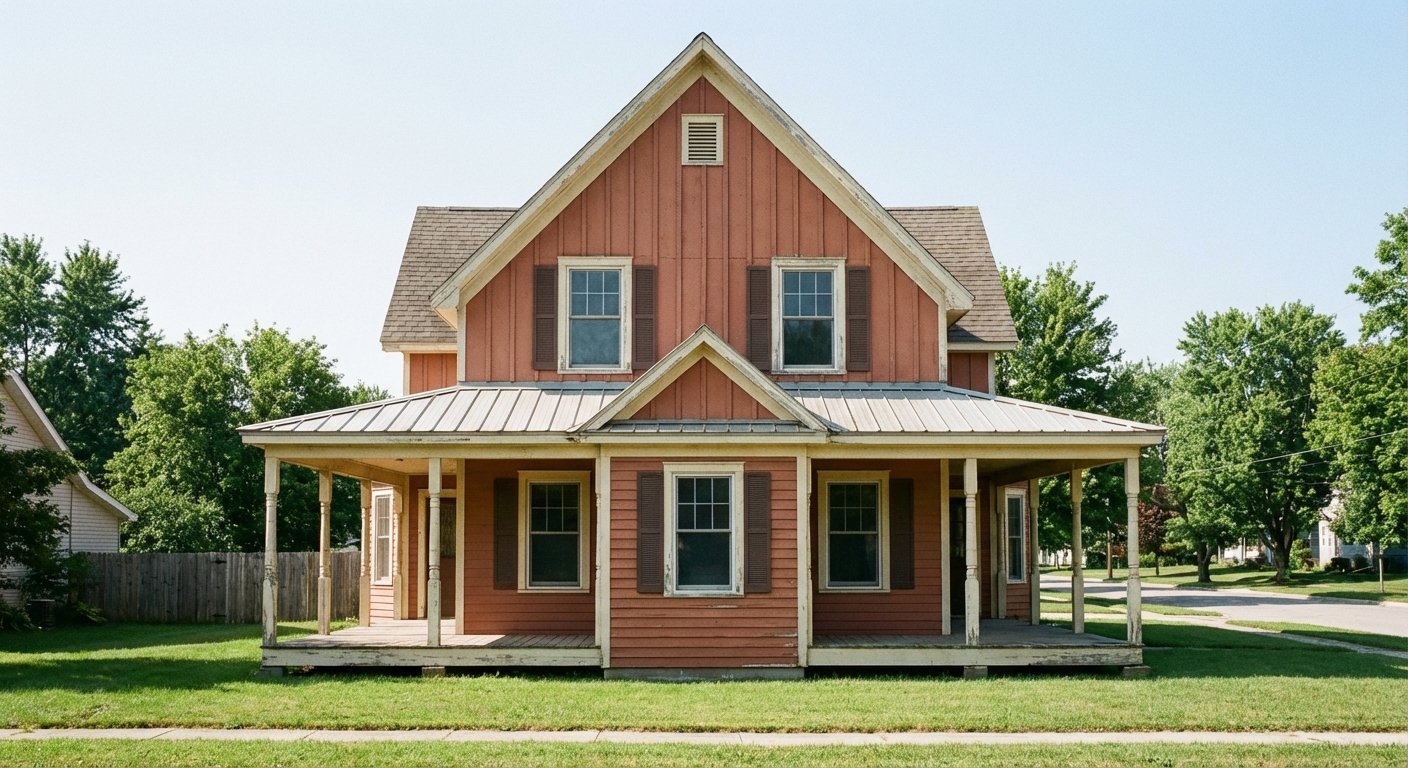
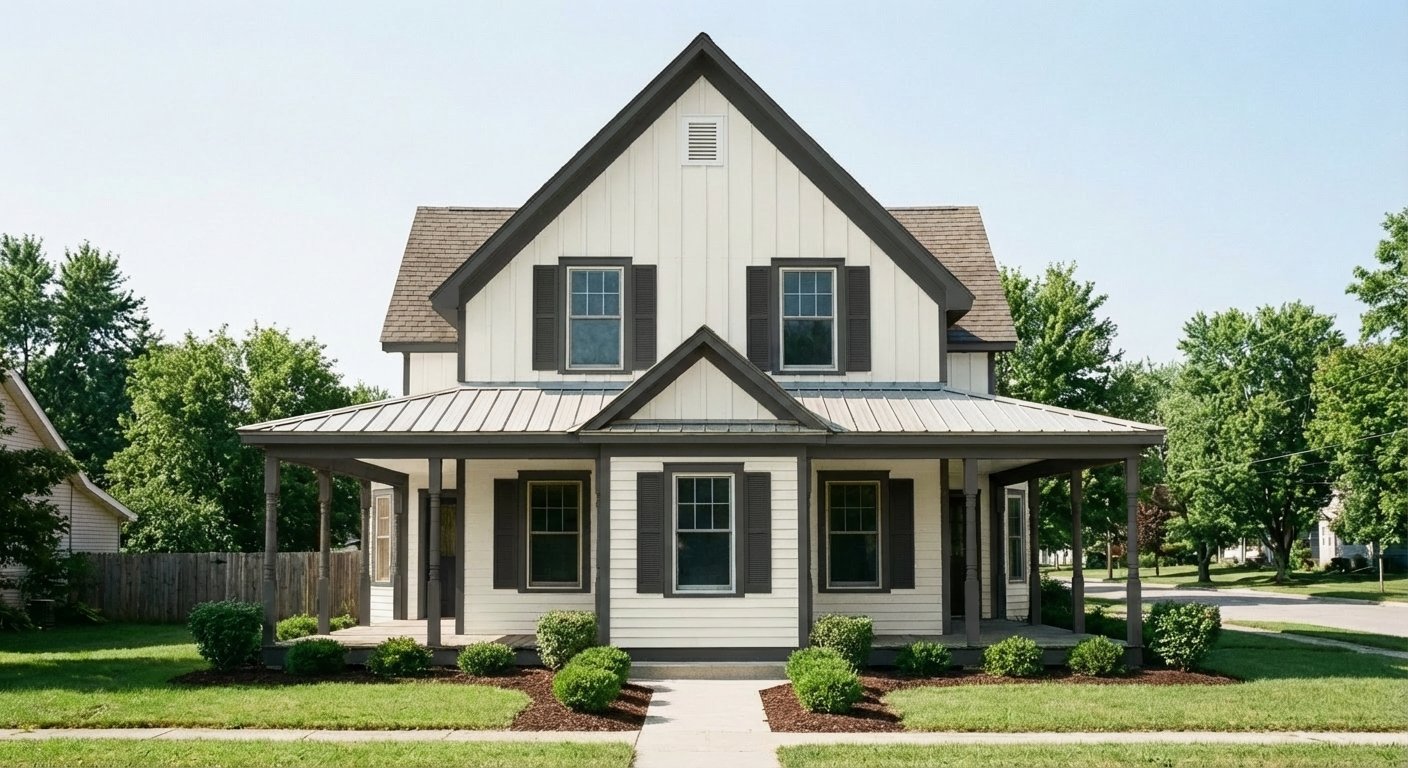
Farmhouse architecture spans from the original agrarian homes of the 1700s–1800s to the modern farmhouse revival that dominates new construction today. Traditional farmhouses feature steeply pitched gabled roofs, full-width or wraparound porches with simple turned or square columns, and vertical board-and-batten or horizontal clapboard siding, often on the same house. Modern farmhouses add black-framed windows, standing-seam metal roofs, and mixed materials like stone veneer at the base. The color palette is deliberately limited: the body is almost always white or near-white, letting the siding texture, roof profile, and porch proportions create visual interest. Accent colors are confined to trim, doors, window frames, and hardware. The less color, the more the architecture speaks.
Top Color Palettes for Farmhouse Homes
Classic White Farmhouse
Alabaster is the modern farmhouse standard, warm enough to feel lived-in but white enough to read as clean and intentional. Iron Ore trim on windows, fascia, and porch details creates the high-contrast black-and-white look that defines the style. A Tricorn Black door doubles down on the monochromatic scheme. This palette is proof that two colors can be all you need when the architecture is strong.
Try on your houseGreen Accent Farmhouse
Shoji White is a step warmer than Alabaster, adding a barely-there cream tone that photographs beautifully and feels less stark in person. Greenblack accents replace the typical Iron Ore with a very dark green that's almost black. You only see the green undertone in direct sunlight, but it adds a subtle organic warmth that pure black doesn't have. A natural-stained wood door brings honest material texture into the palette.
Try on your houseWarm Farmhouse
Accessible Beige is the choice for farmhouse owners who want warmth without straying from the neutral foundation the style requires. It reads as a warm, creamy tan, more interesting than white but still restrained enough to let the board-and-batten texture and porch details take center stage. Extra White trim provides the crispness that defines the architectural lines, and a Naval door adds the one deliberate pop of color.
Try on your houseHeritage Farmhouse
Oyster White is the historical choice. Old farmhouses were never bright white because early paints yellowed naturally over time. This soft, slightly golden white feels authentically aged without looking dingy. Urbane Bronze trim is a warmer alternative to black, nodding to the oiled-metal hardware and aged-wood details of original farmhouses. The Red Bay door is the one indulgence. A barn-red accent that ties the house to its agricultural roots.
Try on your houseColors to Avoid on Farmhouse Homes
Farmhouse style is defined by restraint. Adding a third, fourth, or fifth accent color, different shutters from the trim, a door that doesn't match either, decorative color on gable vents, turns a farmhouse into a Victorian. The rule is simple: white body, one dark accent, one door color. That's it. If you need more visual interest, add texture and landscaping, not more paint colors.
A blue, yellow, green, or red farmhouse body fights the style's fundamental identity. Farmhouse architecture gets its character from texture (board-and-batten, clapboard, metal roof) and form (steep gables, deep porches, simple columns), not from colorful walls. Saturated body colors compete with the architectural details rather than showcasing them.
Board-and-batten siding creates its own visual rhythm through the vertical battens. Painting trim in multiple contrasting colors or adding decorative banding interrupts that rhythm and makes the facade look busy rather than serene. Let the siding texture speak. Keep trim to a single consistent color across all fascia, window casings, and corner boards.
Tips for Choosing Colors for Your Farmhouse Home
- Texture matters more than color on a Farmhouse. Board-and-batten siding, a standing-seam metal roof, and natural wood porch flooring create visual richness even with just two paint colors. Before adding a third color, ask yourself if adding texture (cedar shutters, stone veneer, wood-stained porch ceiling) would accomplish the same goal.
- Choose between black trim and dark green trim. Don't use both. Iron Ore and Greenblack are both excellent farmhouse accent colors, but they serve the same role. Pick one and commit to it across all trim, shutters, and window frames for a cohesive look.
- If your Farmhouse has a metal roof, let its color guide your accent choices. A black standing-seam roof calls for Iron Ore or Tricorn Black trim. A dark bronze or weathered metal roof works better with Urbane Bronze or Black Fox accents. Matching the trim to the roof color creates a frame effect that pulls the whole house together.
- Don't underestimate the power of the white. There are dozens of whites, and they're not interchangeable on a Farmhouse. Alabaster reads warm and modern, Pure White reads crisp and clean, Shoji White has a cream undertone, and Oyster White leans slightly golden. Test at least three whites on your siding before committing. The wrong white can look dingy or cold depending on your roof and landscape.
See these colors on your Farmhouse home
Upload a photo of your house and preview any of these palettes in under 30 seconds, free.
Try PaintVue FreeFrequently Asked Questions
What is the most popular white for farmhouse exteriors?
Should farmhouse trim be black or white?
What color door for a white farmhouse?
Can I paint a farmhouse a color other than white?
What's the difference between modern farmhouse and traditional farmhouse colors?
Explore Farmhouse Color Palettes
See Also
Best Colors for Colonial Homes · Best Colors for Ranch Homes · Best Colors for Craftsman / Bungalow Homes · Best Colors for Split-Level Homes · Best Colors for Cape Cod Homes · Best Colors for Mid-Century Modern Homes · Best Colors for Contemporary Homes · Best Colors for Tudor Homes · Best Colors for Mediterranean Homes